
Jordanian AmericaFather Killed in Chicago After Refusing to Sell Cigarettes to a Minor
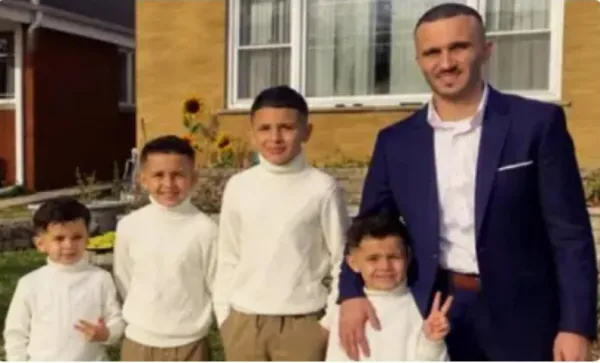
Jordanian American father of four killed in Chicago after refusing to sell cigarettes to a minor. Photo credit: Jarayid.com
A 34-year-old Jordanian American man, Mohammad Faiq Al-Hashaisheh, known as “Abu Fares,” was shot and killed inside his tobacco shop in Chicago a week ago, after reportedly refusing to sell cigarettes to a 17-year-old customer who would not provide identification. According to reports cited by Gulf News, the victim was killed after attempting to enforce age restrictions on tobacco sales.
Chicago has frequently made national headlines for violent crime, particularly homicides. In 2024, the city reported 573 homicides in a population of approximately 2.7 million, according to Al Jazeera.
Incident Details
According to the victim’s family, a 17-year-old boy entered Mohammad’s shop seeking to purchase cigarettes. Mohammad reportedly refused the sale because the customer was underage and asked him to provide identification.
The teenager allegedly left the shop but later returned armed with a handgun. He reportedly shot Mohammad, striking him in the throat. Mohammad succumbed to his injuries shortly afterward.
If the family's account is confirmed, this would be a particularly disturbing case of violence against a shopkeeper who was attempting to comply with the law.
Suspect and Investigation
According to reports, Chicago authorities have identified a 17-year-old suspect and are pursuing his arrest. As of the latest reports cited in this article, no one was in custody, and the investigation was ongoing.
The authorities' investigation will be crucial in establishing the full circumstances of the shooting and determining responsibility.
The Victim: A Husband and Father of Four
Al-Hashaisheh had reportedly lived in the United States for 15 years and was an American citizen. He was the father of four young children, and his wife was pregnant at the time of the shooting, according to Jordanian media reports.
Family members and friends described him as a hardworking man who was dedicated to providing for his family.
His killing has caused profound grief among his loved ones and members of the Jordanian and broader Arab American communities in Chicago.
Beyond the tragedy of his death, the loss leaves a young widow facing the difficult task of raising their children without their father. Their unborn child will never have the opportunity to meet him, and his four young children will grow up without his daily presence, guidance, and love.
Community Response
Funeral arrangements were reportedly being made in the United States, while a condolence hall was expected to be established in Jordan for those wishing to pay their respects.
Community members and local leaders have also expressed their condolences and organized prayers and vigils in response to the tragedy, according to reports cited by CBS News.
The killing has renewed concerns about violence against small-business owners and the dangers that workers can face while simply trying to do their jobs.
Jordan's Government Responds
Jordan's Ministry of Foreign Affairs and Expatriates issued a statement on October 3 indicating that it was following the killing of Jordanian citizen Mohammad Al-Hashaisheh.
The ministry said the Jordanian Embassy in Washington was communicating with U.S. authorities investigating the case and maintaining contact with Mohammad's family.
It also indicated that assistance had been provided regarding burial arrangements in the United States, in accordance with the family's wishes.
Jordan's diplomatic involvement reflects the seriousness of the case and the importance of supporting the victim's family during this difficult time.
Major Arab-American Population Centers in the United States
According to the Arab American Institute (AAI), Arab American communities are established across several major metropolitan areas in the United States. Among the prominent population centers are:
- Detroit metropolitan area, Michigan: The region, particularly Dearborn, is one of the country's most prominent centers of Arab-American life and culture.
- New York metropolitan area: Communities throughout Brooklyn, Queens, and Long Island include Americans with roots in Lebanon, Egypt, Syria, and other Arab countries.
- Los Angeles and Southern California: Anaheim and other parts of Orange County are home to sizable Arab-American communities, including people of Lebanese, Syrian, and Palestinian heritage.
- Chicago metropolitan area, Illinois: Chicago and its surrounding suburbs, including Bridgeview, have established Arab-American communities with diverse backgrounds, including Palestinian, Jordanian, Lebanese, and Iraqi heritage.
- Washington, D.C., metropolitan area: Northern Virginia and Maryland suburbs are home to growing Arab-American communities, including professionals and families from across the Arab world.
These communities are an important part of America's social and cultural fabric. The loss of a member of the Jordanian American community is felt not only by his immediate family but also by people who share his heritage and understand the sacrifices many immigrant families make to build a life in the United States.
An Innocent Man Did Not Deserve to Die
Sadly, if the reported circumstances are accurate, Mohammad Al-Hashaisheh was doing nothing more than enforcing the age restrictions on cigarette sales. He was attempting to follow the law, not provoke a confrontation.
He did not deserve to lose his life over a refused cigarette sale. What is happening in our society when a disagreement over something so ordinary can allegedly escalate into deadly violence?
No family should have to endure such a devastating loss because someone could not accept being told no. A shopkeeper should be able to enforce the law without fearing that doing so could cost him his life.
I hope the suspect is apprehended, receives a fair trial, and, if convicted, faces the full consequences permitted by law. Justice must be served, and the victim's family deserves answers and accountability.
Should the Death Penalty Be Reconsidered?
I strongly believe that reinstating the death penalty in all 50 states could serve as a deterrent to violent crime. In my view, knowing that the most severe punishment could follow a deliberate act of murder might make some people think twice before taking another person's life.
I recognize that the effectiveness of capital punishment as a deterrent remains a subject of debate. Nevertheless, I believe society must take a serious look at how it can better protect innocent people and hold violent offenders accountable.
A man who was reportedly trying to obey the law lost his life, leaving behind a pregnant wife and four young children. His family will carry the consequences of this tragedy for the rest of their lives.
No punishment can bring Mohammad back or erase the pain his children will endure as they grow up without their father. But justice must be pursued, and society must continue searching for ways to prevent such senseless violence.
My deepest condolences go out to Mohammad's family, friends, and the Jordanian and Arab American communities mourning his loss.
May Mohammad Faiq Al-Hashaisheh rest in peace, and may his family find strength and comfort during this heartbreaking time.
About the Author
Mahmoud El-Yousseph is a Palestinian freelance writer and retired U.S. Air Force veteran. He writes about U.S. foreign policy, Middle Eastern affairs, and justice.